Botë · BBC

The Iran war has strengthened Ukraine in surprising ways. Could a ceasefire with Russia be closer?

President Zelensky has been visiting the Gulf to demonstrate his country's military nous. 5 hours ago Share Save Add as preferred on Google Katya Adler Europe editor When Ukrainian President Volodymyr Zelensky, serious-faced and clad in black, strolled down a lilac carpet in Saudi Arabia in March, it marked a moment in the US-Israeli war in Iran.

The Iran war has strengthened Ukraine in surprising ways. Could a ceasefire with Russia be closer?
The Iran war has strengthened Ukraine in surprising ways. Could a ceasefire with Russia be closer? - foto 2
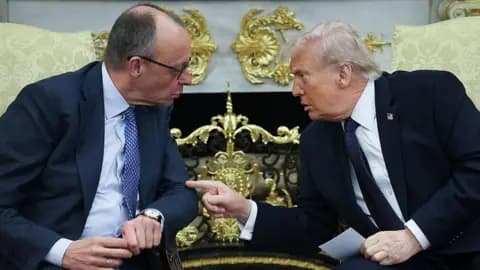
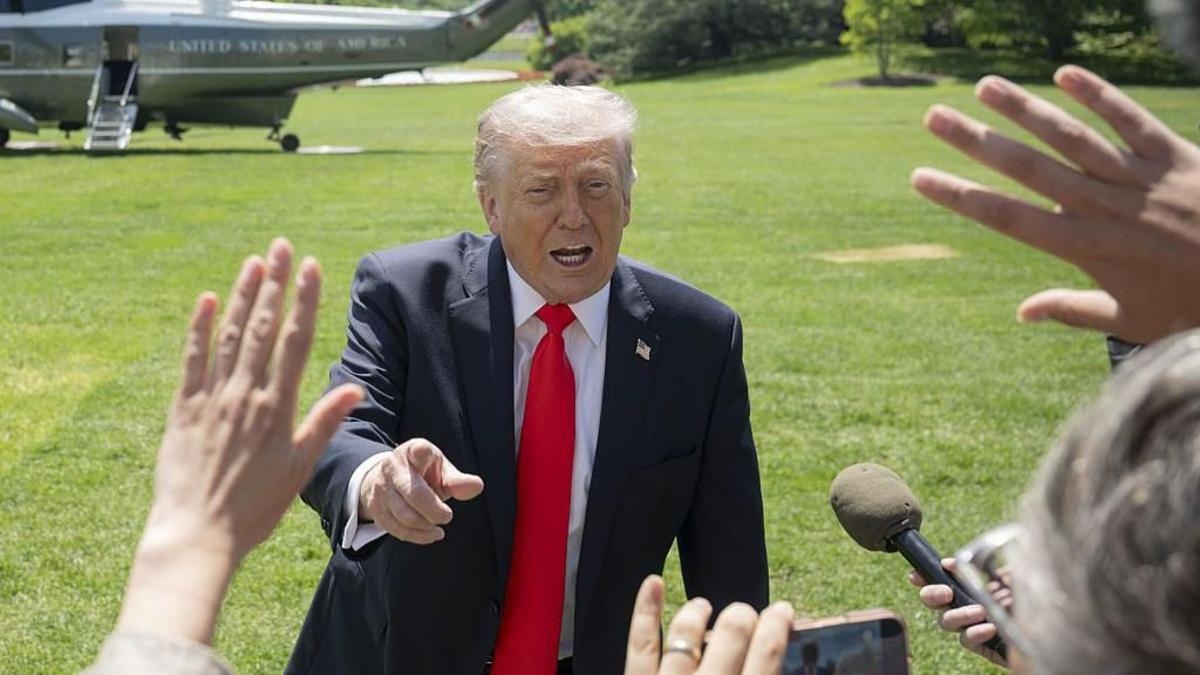
Moscow has been able to sell more of its oil to more countries, at higher prices as tankers carrying Middle Eastern oil are unable to reach global customers Iran-bordering Strait of Hormuz. Trump has renewed a waiver allowing countries to buy sanctioned Russian oil because of spiralling costs worldwide. The more money Russia has, the longer and, in theory, harder, it can prosecute the war in Ukraine. But Kyiv has consistently confounded international expectations since Russia invaded Ukraine in February 2022. And now it's done so again: playing a deft hand at trying to turn the impact of the Iran war to its advantage, as Ukraine tries to get itself in the strongest position possible before eventual, hoped-for peace negotiations with Russia. On Wednesday, Trump said he was confident a "solution" over Ukraine could be reached "relatively quickly" following a "very good" conversation with Vladimir Putin. "I think 'some people' (have) made it difficult for him to make a deal," he added. It's not the first time Trump's made similar positive comments about Putin, while implicitly or explicitly criticising Ukraine's leader for not signing up to a ceasefire. A "solution" has yet to materialise. In the meantime, Zelensky has focussed on bolstering Ukraine where he can.

Opportunism is arguably one of his most potent weapons. Saudi Arabia, which he visited again in April, has faced the same type of ballistic missile and drone attacks from Iran that Russia barrages Ukraine with, he said. One of Moscow's most powerful weapons has been the Iranian-designed low-cost, long range Shahed-136 attack drone, plus its own updated version, the Geran. While a Shahed can cost between $80,000 and $130,000 (£59,500 and £95,500), Zelensky says it can be intercepted with systems costing as little as $10,000 (£7,400). That's far cheaper than traditional air defence missiles which cost millions of dollars. Threatened sightings in a number of European cities, Nato countries have been paying attention. Ukraine signed two substantial defence cooperation agreements with European allies in April. One was with Norway, for $8.6bn, as part of a $28bn package of support until 2030. The other was with Germany, including "various types of drones, missiles, software and modern defence systems," valued at $4.7bn. As for the Gulf States, Zelensky said he hoped for their help defending Ukraine against Russia.

Particularly because at the moment, the US has less military hardware available to sell to Europeans to help Ukraine, as Washington burns through supplies in the Middle East. Trump's response when asked about redirecting weapons has been: "We do that all the time. Sometimes we take from one, and we use for another." "We would like Middle Eastern states to also give us an opportunity to strengthen ourselves," Zelensky recently told French newspaper Le Monde. "They have certain air defence missiles of which we don't have enough. That's what we'd like to reach a deal on. Ukraine has also learned a key lesson from the Iran conflict to use back home: the big bang impact of attacking an adversary's oil export facilities. Russia's energy infrastructure is now a priority target, using Ukraine-manufactured long-range drones. According to Zelensky, Russia is suffering "critical" losses running to billions of dollars in its energy sector despite the recent surge in global oil prices. Crude oil export data suggests the rise in prices, plus the easing of American sanctions on countries buying Russian oil, boosted Russian revenues to 2.3 times their December-February levels in the third week of the Iran war. But in the fourth week, Ukrainian drone strikes on energy-producing infrastructure reduced Russia's earnings by $1 billion, eradicating around two-thirds of the previous week's gains.

Another plus for Ukraine from the Iran war fallout has been finally getting the green light last week on a €90bn (£78bn), EU-backed loan that Kyiv said it urgently needed to purchase and produce military equipment over the coming year. The loan had been blocked for months Hungary's then pro-Kremlin prime minister. But Hungary now has a new, determinedly less Russia-friendly leader, after Viktor Orbán's resounding defeat in Hungary's election last month. Orbán is a close friend and admirer of Donald Trump. That didn't help him at election time. Voters said they were angry about the Iran war, which has pushed up their energy costs. That aided Orbán's demise, allowing the EU's Ukraine loan to finally be released. With those "wins" under Kyiv's belt, plus Ukraine's boast that it is consistently killing more enemy soldiers each month than the 30,000 Russia has reportedly been recruiting in that time, Zelensky no longer feels on the back foot and may be in a better position to pursue a peace deal with Russia. The sense of urgency in Ukraine is longstanding. People are tired and suffering.

Conscripting new soldiers has been a serious challenge for a while now, and those on the battlefield are desperate to go home. So what of negotiations aimed at establishing a sustainable ceasefire? They had been talked up so loudly administration before Christmas. Before being re-elected president, Trump repeatedly said he would end the violence in Ukraine in 24 hours. Now he's in office, the reality has not lived up to the promise. A big clue is to follow the movements of Trump's designated peace envoys, his son-in-law, Jared Kushner, and the former real estate magnate, Steve Witkoff. A trip to Kyiv has been repeatedly postponed. Instead, they're preoccupied with the Middle East. Zelensky has said he considers the pair's absence "disrespectful". He says peace discussions are ongoing at a "technical" level but fears no progress will really be made until the Iran conflict has ended.

Who knows when that will be? It's worth noting that Kushner and Witkoff have never visited Kyiv in an official capacity. They visited the Russian capital late last year as ceasefire talks aimed at ending the war in Ukraine gained pace, and again in January. Witkoff has been to Moscow eight times - he used to do a lot of business in Russia, in a private capacity. He's met Putin on a number of occasions. The Trump administration has denied any bias towards Russia. But Ukraine and other European countries were perturbed to read the US National Security Strategy (NSS), published towards the end of last year. It conspicuously does not label Russia a security threat. This is in direct contrast to how Moscow is viewed by Washington's European allies in Nato. The NSS does underline the importance of ending the war

Burimi: BBC NewsLexo artikullin origjinal ↗

Lajme të ngjashme