Ekonomi · BBC
The threat to summer holidays looming from jet fuel shortages
What impact might shortages have on our summer holidays - and what could be done about it? It is, of course, the pervasive smell of jet fuel.

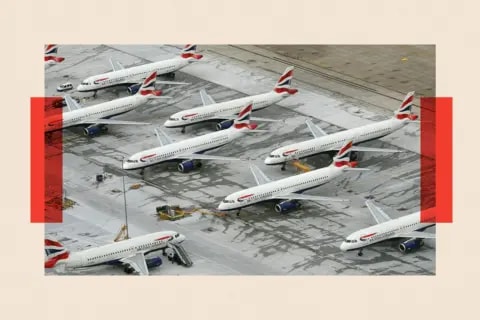
What impact might shortages have on our summer holidays - and what could be done about it? It is, of course, the pervasive smell of jet fuel. The price of jet fuel has risen dramatically on international markets since the start of the conflict in the Middle East. Unless extra supplies can be found, a lack of fuel could lead to further disruption and cancellations heading into the peak summer holiday period. The crisis has exposed just how vulnerable the industry in the UK - Europe's biggest consumer of jet fuel - is to disruption in the Middle East.
The Gulf region produces far more jet fuel than it requires for its own purposes. Europe as a whole is a key buyer of that fuel. This has pushed up prices dramatically. In late February, before the first US and Israeli airstrikes, jet fuel was trading at $831 per tonne in Europe. Jet fuel is essentially a highly refined form of kerosene with specialised additives, and is usually produced from fractional distillation of crude oil.
Because supplies are dictated largely by the availability of refining capacity, the loss of output from the Gulf has led to jet fuel prices increasing far more than those for crude oil. "We have had five refinery closures in the last two-and a-bit years in Europe, whereas jet fuel demand has been rising year on year," explains Amaar Khan, head of jet fuel pricing at Argus Media. For airlines, fuel is a major expense. In Europe and Asia, it is common for airlines to use hedging strategies to limit their exposure to rising prices, buying fuel or other oil products at a fixed or capped cost in advance. EasyJet, for example, hedged 80% of its fuel supply for the first half of the year at $717/tonne - but finding the remainder at prevailing prices cost the airline an extra £25m in March alone.
The US carrier United Airlines has been particularly bullish about making sure passengers bear the brunt of higher fuel costs, with its CEO Scott Kirby telling investors last month the company would do "whatever it takes to recover 100% of the increase in jet fuel prices as quickly as possible". But although fuel prices have clearly been the leading preoccupation for airlines since the start of the conflict in Iran, there is another looming concern that particularly affects Europe: the risk that supplies could actually run short. In mid-April, the head of the International Energy Agency (IEA), which advises 32 member governments on energy supply and security, warned that Europe had "maybe six weeks of jet fuel left". It is important to note that although Europe is highly dependent on Middle Eastern sources, it does get fuel elsewhere. However, East Asian refineries rely heavily on supplies of crude oil from the Middle East, which have been restricted by the war – and that has curbed the amount of jet fuel available for export.
It uses Jet A, which has a higher freezing point than the Jet A1 supplied here. Not all US refineries that make jet fuel are currently capable of producing Jet A1, limiting the extra that can be shipped across the Atlantic. Until last year, India was a major source of fuel as well. "In practice, what that led to was the removal of Indian jet fuel from the European market en masse. The threat to summer holidays looming from jet fuel shortages