Kulturë · The Guardian

‘One of the most profound encounters of my life’: could existential therapist Emmy van Deurzen change the way you think?

Her philosophical approach to therapy has become a global phenomenon, and inspired a new book. Could a session with her change Sophie McBain’s life?
‘One of the most profound encounters of my life’: could existential therapist Emmy van Deurzen change the way you think?

‘One of the most profound encounters of my life’: could existential therapist Emmy van Deurzen change the way you think? - foto 2

“From that moment on I just knew: nobody’s doing this. I’m going to have to do it myself,” she says. Continue reading... Interview Sophie McBain Her philosophical approach to therapy has become a global phenomenon, and inspired a new book. Could a session with her change Sophie McBain’s life? T he existential therapist Emmy van Deurzen moved to the UK inspired , the Scottish anti-psychiatrist who said insanity is a “perfectly rational adjustment to an insane world”. It was 1977 and Van Deurzen, who is Dutch and had studied philosophy and psychology in France, found work with the Arbours Association in London, a therapeutic community based on Laing’s ideas, in which people in crisis, psychiatrists and therapists lived together as equals. It was a rude awakening. Arbours aimed to create space for people to “explore their madness”. “Now that was a very interesting idea,” Van Duerzen says, “but in practice it meant that people self-medicated, with alcohol and pot, and it was not a happy situation.” The residents were often very depressed or psychotic, and it was common to be woken up at night because someone was seeing things or had become suicidal.

Van Deurzen came to believe that anti-psychiatry had “lost courage”: it had proposed a different way of thinking about madness, but having released people from asylums and taken them off neuroleptic drugs, it was “kind of leaving them to it”. “And this is what I realised wasn’t good enough,” she says. When people are experiencing a mental health crisis, they need help to make sense of what has happened to them, and to find their way to healing. “From that moment on I just knew: nobody’s doing this. I’m going to have to do it myself,” she says. With a colleague, she established an existential therapy centre at Arbours, the first of its kind in this country. Existential therapy is “a philosophical approach to therapy and how to live your life in a better way,” Van Deurzen explains, “it is about working with life, rather than just with the psyche”. Although not a household name, Van Deurzen is hugely influential in her field and popularised this form of psychotherapy in the UK. Many of the 350-odd existential therapists accredited Council for Psychotherapy will have trained at one of the schools she established, and all of them will be familiar with her writing and textbooks. Van Deurzen became aware of other thinkers who were adopting a similar approach to psychotherapy, including Rollo May and Irvin Yalom in the US.

Over the past five decades, existential therapy has grown into a loose, international movement. In 2015, Van Deurzen organised the first ever international congress for existential therapy in London, which was attended by almost 700 people from all over the world. You could trace the movement’s origins to psychiatrists Ludwig Binswanger and Medard Boss in Switzerland who, in the 1930s, tried to apply Martin Heidegger’s philosophical ideas to understanding mental illness with an existentialist therapy that focused on the patient’s immediate, lived experience rather than just subconscious drives. But Van Deurzen takes a broader view of its intellectual heritage, which she says stretches back to the Athenian philosophers and early Hindu, Buddhist and Taoist thinkers. “Human beings have always had conversations about what’s going wrong in their lives, what it means to be alive, how they can live a better life, how they can become a better person, and how they can make more of this very short time we have to be in this world,” she says. In her new book, Beginning to Live, the first she has written for a general readership, she draws on the work of many philosophers – not only the canonical existentialists, such as Jean-Paul Sartre, Søren Kierkegaard and Simone de Beauvoir – and demonstrates a knack for distilling complex ideas into something easy to grasp and practical. All over the world, and throughout history, writers have grappled with the same existential questions. “It’s a rich heritage we don’t use enough,” she says. She is interested in how we can cultivate meaning, courage and freedom despite or because of the suffering life throws at us, a process that begins with how we approach life, how we cultivate our inner worlds. She quotes the psychiatrist and Holocaust survivor Viktor Frankl, who recognised that the one freedom that cannot be taken from us is the freedom “to choose one’s attitude in any given circumstances”, and also the poet Rumi, who wrote: “If you put on shoes that are too tight and walk out across an empty plain, you will not feel the freedom of the place unless you take off your shoes.” Often, Van Deurzen believes, these too-tight shoes are of our own making.

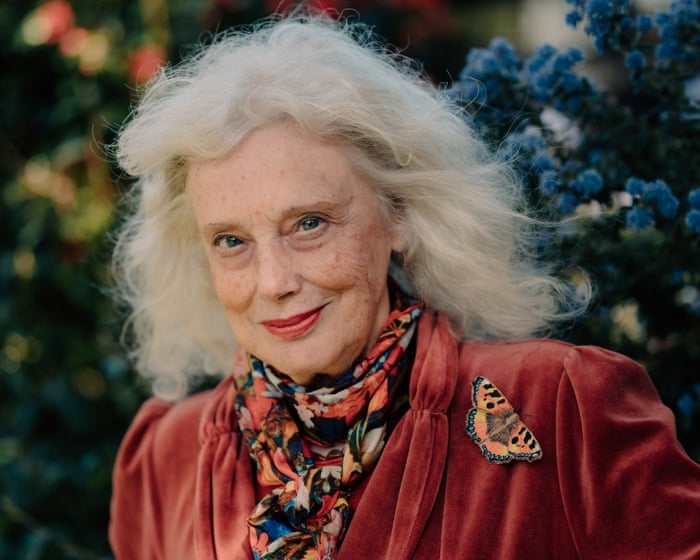
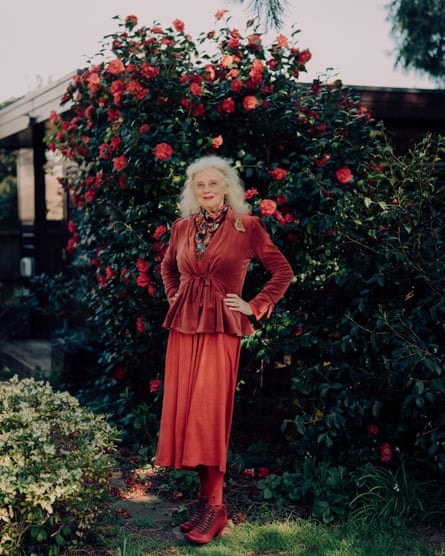
We are speaking over video call. I can see her home office in the background with its dark, tightly packed bookshelves, a glass case of mounted butterflies and a painting of an idyllic woodland path. Van Deurzen is 74 years old and looks as one might imagine a therapist to look – or perhaps a school art teacher or modern-day druid – with a mop of white, candy-floss curls and jewel-coloured clothing. In photographs she sometimes wears a big flower crown. She has barely spoken her native tongue since she left the Netherlands in 1970 and her accent is now hard to place, revealing itself mostly in a slight shifting of vowels so that “come” sounds like its Dutch equivalent, kom . Her early years, growing up in The Hague, were probably her hardest, she says. To live in postwar Holland was a “very dark, dour experience”. Many people she knew were depressed and still traumatised occupation. Money was tight. Her parents had endured the famine of 1944-45.

Her father, an antiques expert, had joined the resistance and almost died after spending a winter hiding in an unheated loft and catching pneumonia. At night, she heard her neighbour screaming as he relived his torture in a Japanese prisoner of war camp. “I struggled with wanting to be a part of life, really, looking at how terrible it all was,” she recalls. At 15, Van Deurzen fell wildly in love with a 20-year-old Frenchman she met on a camping holiday in Portugal. For two years he wrote letters to her daily, and they met when they could. Then he ghosted her. She was devastated and spiralled into depression. She tried to kill herself twice. After the second attempt, she told her father, who took her to the school rector. The rector enlisted her help to find out why so many students were struggling emotionally: two pupils had died in the previous year – one in a traffic accident while on LSD, and another as a result of suicide.

Van Deurzen found a renewed sense of purpose, and ultimately a vocation. “It is the event that seems like a catastrophe that s you,” she writes in her book. At 18, she left for the University of Montpellier Paul Valéry, where she studied philosophy and began training as a psychoanalyst. There she met her first husband, Jean-Pierre, a young psychiatrist, whom she married in 1972. The couple found work at St Alban, a pioneering psychiatric hospital, and later moved to other French hospitals that were experimenting with innovative, less coercive forms of mental health care. Van Deurzen worked as a psychoanalyst and began to develop her “philosophical method” of talking with patients. She started structuring each conversation like a Socratic dialogue, asking open-ended questions and challenging a person’s assumptions. “Instead of standing in judgment or making decisions about what was wrong with the person, I was allowing this philosophical exploration to take place,” she says. Van Deurzen also studied for a master’s in clinical psychology. Soon after she moved to the UK, she and Jean-Pierre split up.

Van Deurzen opened her first private practice in 1978. She says that being a woman in a male-dominated field was “part of my struggle and part of my privilege”. “I was going to do things my way, because I felt it was about time to have a more female approach, and felt quite free to come up with my own. Because, really, there weren’t very many fema

Burimi: The Guardian CultureLexo artikullin origjinal ↗

Lajme të ngjashme