Kulturë · The Guardian
Pavijoni britanik i Lubaina Himid në Bienalen e Venecias – tjetërsimi në një tokë të gjelbër dhe të këndshme
Në mes të një kolone zanore qetësuese me valë që lëkunden dhe zogj që ulërijnë, punëtorët në piktura me ngjyra të ndezura ndajnë pamje që thonë: ‘Çfarë dreqin po bëjmë këtu?’ Por a nuk ka më shumë për të mos i përkitur se sa sugjeron kjo shfaqje? Komoditetet e shtëpisë nuk janë gjithmonë aq të rehatshme.
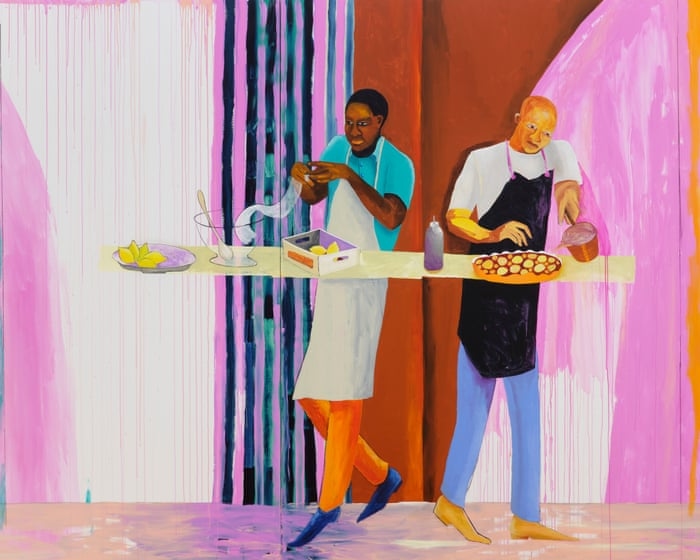
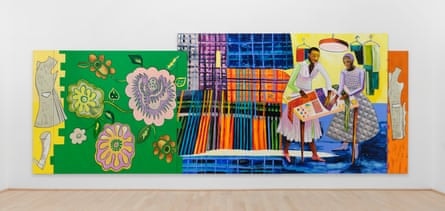
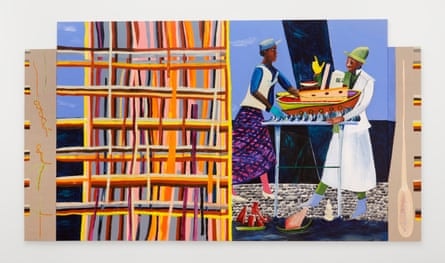
Në mes të një kolone zanore qetësuese me valë që lëkunden dhe zogj që ulërijnë, punëtorët në piktura me ngjyra të ndezura ndajnë pamje që thonë: ‘Çfarë dreqin po bëjmë këtu?’ Por a nuk ka më shumë për të mos i përkitur se sa sugjeron kjo shfaqje? Komoditetet e shtëpisë nuk janë gjithmonë aq të rehatshme. Këtu në Bienalen e Venecias, Lubaina Himid pikturon një portret të vështirë, të tensionuar dhe të pakëndshëm të kombit tonë të vjetër të lagësht.Instalacioni i saj i pikturave monumentale dhe një mur me lisa të pikturuar në pavijonin britanik është plot me rrobaqepës, kuzhinierë dhe arkitektë, njerëz që formësojnë vendin, duke e mbajtur atë të ushqyer, të veshur dhe të strehuar. Një pjesë audio gromësin nëpër hapësirë me tingujt e jetës së vendit bukolik: pulëbardhat, manipulimi me shuplaka në direk, thirrjet e zogjve dhe mizat që gumëzhijnë.
Sa e bukur është Britania e Madhe, sa mikpritëse dhe e sjellshme dhe pranuese. Vazhdoni leximin...Recensionet Mes një kolone zanore qetësuese të valëve të prerjes dhe zogjve që ulërijnë, punëtorët në piktura me ngjyra të ndezura ndajnë pamje që thonë: ‘Çfarë dreqin po bëjmë këtu?’ Por a nuk ka më shumë për të mos i përkitur se sa sugjeron kjo shfaqje? Disa komoditete nuk janë gjithmonë aq të rehatshme. Këtu në Bienalen e Venecias, Lubaina Himid pikturon një portret të vështirë, të tensionuar dhe të pakëndshëm të kombit tonë të vjetër të lagësht.Instalacioni i saj i pikturave monumentale dhe një mur me lisa të pikturuar në pavijonin britanik është plot me rrobaqepës, kuzhinierë dhe arkitektë, njerëz që formësojnë vendin, duke e mbajtur atë të ushqyer, të veshur dhe të strehuar. Një pjesë audio gromësin nëpër hapësirë me tingujt e jetës së vendit bukolik: pulëbardhat, manipulimi me shuplaka në direk, thirrjet e zogjve dhe mizat që gumëzhijnë. Sa e bukur është Britania e Madhe, sa mikpritëse, e sjellshme dhe pranuese.Megjithatë, pyetjet shfaqnin ankthin ekzistencial të shfaqjes, ndjesinë se nëse je ndryshe, nuk do të ndihesh kurrë vërtet pjesë e asgjëje. Shfaqja është posaçërisht për migracionin dhe statusin emocional, shoqëror të njerëzve që shpërngulen në Britani, por përkatësia është shumë më e komplikuar sesa dëshiron të besojë kjo ekspozitë.
Miliona njerëz në Britani ndihen sikur nuk i përkasin.Pavarësisht nga të gjitha ngjyrat e ndritshme, pavarësisht nga tingujt qetësues të valëve që lëkunden dhe zogjve që ulërijnë, Himidi sheh një të vërtetë më të errët për Britaninë: mund të jetë e gjelbër dhe e këndshme, por për shumë njerëz, nuk do të ndihet kurrë si në shtëpi. Eksploro më shumë mbi këto tema Shpërndaje Përdore përsëri këtë përmbajtje Mes një kolone zanore qetësuese të valëve të prerjes dhe zogjve që ulërijnë, punëtorët në piktura me ngjyra të ndezura ndajnë pamje që thonë: ‘Çfarë dreqin po bëjmë këtu?’ Por a nuk ka më shumë për të mos i përkitur se sa sugjeron kjo shfaqje?Komoditetet e shtëpisë nuk janë gjithmonë aq të rehatshme. Këtu në Bienalen e Venecias, Lubaina Himid pikturon një portret të vështirë, të tensionuar dhe të pakëndshëm të kombit tonë të vjetër të lagësht.
Instalacioni i saj i pikturave monumentale dhe një mur me lisa të pikturuar në pavijonin britanik është plot me rrobaqepës, kuzhinierë dhe arkitektë, njerëz që formësojnë vendin, duke e mbajtur atë të ushqyer, të veshur dhe të strehuar.Një pjesë audio gromësin nëpër hapësirë me tingujt e jetës së vendit bukolik: pulëbardhat, manipulimi me shuplaka në direk, thirrjet e zogjve dhe mizat që gumëzhijnë. Sa e bukur është Britania e Madhe, sa mikpritëse dhe e sjellshme dhe pranuese. Vazhdoni leximin...