Kulturë · The Guardian

‘Men are so frightened of being too cuddly or affectionate’: Danny Dyer on going from hardman to heart-throb in Rivals

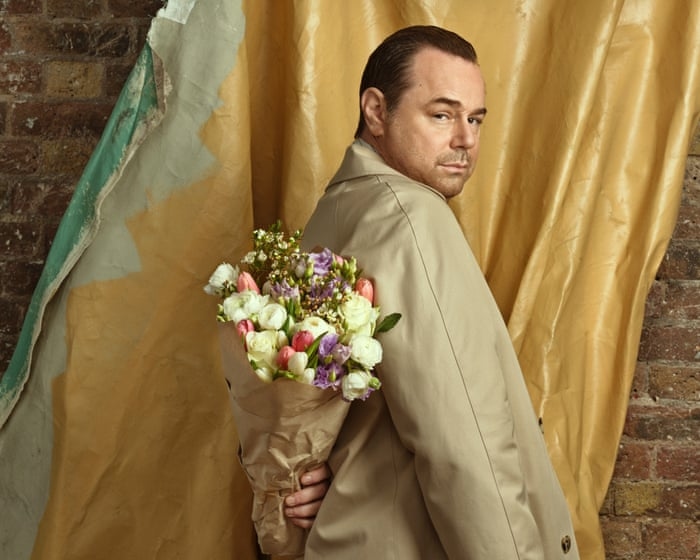
The actor has always been full of surprises – and now thanks to Jilly Cooper’s bonkbuster he’s become a romantic lead. As the series returns, he talks about marriage, masculinity and meditation Danny Dyer is dressed in white and carrying a huge bouquet of flowers when I drop in on his Guardian photoshoot.
‘Men are so frightened of being too cuddly or affectionate’: Danny Dyer on going from hardman to heart-throb in Rivals


You know, I’ve had a long career and I couldn’t get on the cover of anything till now.” Continue reading... The actor has always been full of surprises – and now thanks to Jilly Cooper’s bonkbuster he’s become a romantic lead. As the series returns, he talks about marriage, masculinity and meditation D anny Dyer is dressed in white and carrying a huge bouquet of flowers when I drop in on his Guardian photoshoot. “Hello, baby,” he says to me in a voice so bad-boy East End, so fabulously filthy, that he sounds like a parody of Danny Dyer . We’ve never met before, but you wouldn’t guess. Dyer has been in the limelight for 30 years, but never like this. As he approaches 50, he has become a middle-aged heart-throb. The week we meet, he’s on the front of Rolling Stone UK, and he can’t quite believe it. “I’m on it now , as we speak. And the cover before was Timothée Chalamet!

Pretty cool! You know, I’ve had a long career and I couldn’t get on the cover of anything till now.” For much of his life, Dyer has been more infamous than famous, meat and drink to the redtop newspapers. Party animal? Boozer extraordinaire? Sex scandals? Dyer always provided good copy. But there was more to it than the debauchery. We rooted for him. For all his misdemeanours, he was still with his childhood sweetheart Jo, whom he started dating aged 13. For all his political incorrectness, he was politically astute.

And for every public tumble off the rails, there was an equally compelling performance: on stage, as a protege of great East End playwright Harold Pinter; on screen, as Moff, a motor-mouthed trouble-maker in the rave culture comedy-drama Human Traffic; and on TV, as family man and pink-dressing-gowned grafter Mick Carter, landlord of EastEnders’ Queen Vic. None of this, though, could prepare us for his reinvention as a romcom hero and Britain’s most unlikely national treasure. It’s thanks to the TV adaptation of Jilly Cooper’s bonkbuster Rivals. Dyer plays self-made electronics mogul Freddie Jones, a moral beacon in a world of bastards, double-crossers and priapic bed-hoppers. In series one, with his 1980s-style ’tash, shaggy bob, soft belly and even softer heart, he showed us what it was like to be a real man. An issue that Dyer himself has been battling with for much of his life. W e meet to chat at a pub round the corner from the shoot. We’re in a trendy part of corporate east London, but the pub feels like a relic from the East End Dyer grew up in. Basic and barely furnished, the most gastro thing on offer is a bag of cheddar and onion crisps. He orders a lager, and we settle down in a corner.

“This is a nice boozer, to be fair. Right up my street,” he says. It’s hard to keep up with Dyer, he’s got so many projects on the go. As well as Rivals, there’s the Sky reality show The Dyers’ Caravan Park , in which he and his daughter, Dani, attempt to manage the Priory Hill caravan park on the Isle of Sheppey in Kent; One Last Deal , a single-actor thriller about a football agent on his uppers; The Siege, a Channel 4 drama he’s currently shooting about the six-day standoff at the Iranian embassy in 1980; Nobody’s Fool, a new Traitors-esque ITV gameshow with Rivals co-star Emily Atack … and on it goes. He’s had to call a halt to Live and Let Dyers, the podcast he co-hosted with Dani, because there simply weren’t enough hours in the day. To be fair, Dyer has always put a shift in. You won’t find him talking about the art or his technique; it’s always the job and the money. You sense he remembers how much he’s been paid for every bit of work, whether it’s a gameshow (£100k for The Wall), EastEnders (about £250,000 a year) or Who Do You Think You Are?, in which he discovered he was related to Thomas Cromwell and Edward III. “I got 18 grand for that. I don’t really give a fuck about my distant relatives, but the money was good.

I think the producers were more impressed that I was related to the king than me. I was more impressed with Cromwell, because he was working class.” Occasionally, he’ll contribute to a classic, as with Who Do You Think You Are? And is the case with Rivals. In fact, he more than contributes. Dyer’s Freddie is the heartbeat of the show, and increasingly so in the second series, where the big question is whether Freddie and sweet, brow-beaten love interest Lizzie will get together. Dyer isn’t giving anything away. “I don’t want to do no spoilers, but Lizzie asks him if he wants to come in for fish fingers.” He stops, worried he’s already said too much. “That’s not a euphemism.” Freddie is so different from most of Dyer’s characters. He’s still best known for self-destructive brutes such as Tommy Johnson in 2004’s The Football Factory and Jack in 2025’s Marching Powder . In both films, directed , he plays a football hooligan.

Dyer says that they shot two different endings for The Football Factory. In one, Tommy, having been savagely beaten and his friend Zeberdee killed, walks away from the violence. In the final version, Tommy asks himself: “After all that, you really do have to ask yourself if it was all worth it?” before answering: “Course it fucking was!” I tell him I wish they’d stuck with the first ending. “With these films, we’re not saying it’s right or wrong, we’re just highlighting it,” he says. “We’re saying this shit happens, it’s tribalism, it’s disenfranchised youth. There’s something about men getting together and drinking. There’s violence in the air.” Dyer insists these characters have never glamorised violence, but I’m not so sure. Marching Powder feels as if it’s at least part inspired life. Middle-aged Jack’s cocaine-fuelled hedonism threatens his marriage. Dyer thinks the film should not have focused so much on hooliganism.

“It dropped off when it was about the football violence, because I felt this was more about a man who was wrapped up in addiction patterns trying to his marriage. We made a mistake in focusing so much on the violence.” Then again, he says, what does he know. It turned out to be his most profitable movie. “Critically it got ruined. I knew it would. We wasn’t making it for the critics. But it’s my biggest success to date. We took over £3m at the box office. Unheard of for one of my films to have taken that sort of money.” Marching Powder feels horribly resonant in a country where football violence is on the rise (an 18% increase in the number of reported incidents in matches across England and Wales in 2024/25, compared with 2023/24); the teachers’ union, NASUWT, recently warned of a “masculinity crisis” in UK schools where almost a quarter of female teachers reported misogynistic attacks from pupils; and the Tate brothers are regarded as role models and young men. His 12-year-old son, Arty, named after the Sopranos’ Artie Bucco, plays Jack’s son in Marching Powder.

Dyer says he worries for him growing up in today’s climate where kids are thinking with AI rather than their brains. “We’re regressing. Back in the day, if you didn’t know something you couldn’t just punch it into a phone and find out the answer. It just makes us fucking lazy, you know what I mean? It’s detrimental for society and for our brains.” So how does he encourage Arty to get off his phone? “I do as much as I can with him. We go out on our bikes together. And I’ve taught him to play chess. I have to let him win, because he’s such a bad loser.” But he admits it’s a struggle. “Now the kids sit indoors on a beautiful day playing games.

There’s no incentive to go out now, and knock on your mate’s door. They can communicate in their headphones all day long in their house, shooting shit, and this is what we have to adapt to as parents.” When Dyer was growing up on an estate in Custom House, east London, his first love was football. It still is. He is a West Ham devotee. Much to his delight, last year Dani married club captain Jarrod Bowen. Dyer has said that he probably loves Bowen more than Dani does. At 48, he is a grandfather of three (Dani and Jarrod have two-year-old twin daughters, Summer and Star;

Burimi: The Guardian CultureLexo artikullin origjinal ↗

Lajme të ngjashme